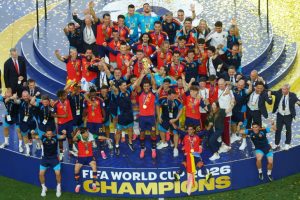

Spain Crowned World Champions After Epic 1-0 Extra-Time Victory Over Argentina in 2026 Final
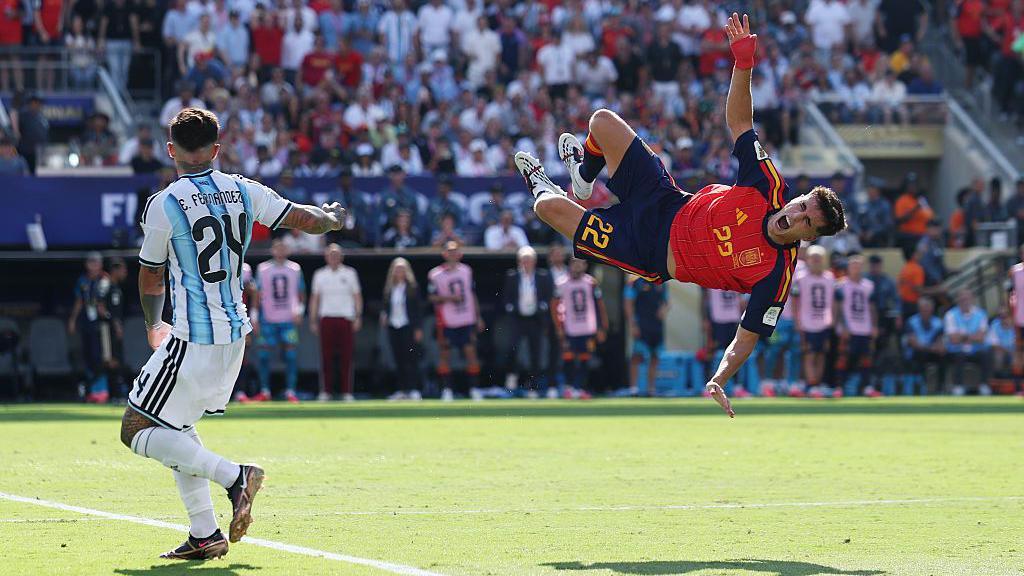
La Roja Reign Supreme: Spain Claim Second World Title in a Classic Final
EAST RUTHERFORD, NEW JERSEY — Spain etched their name into football history once again on July 19, 2026, defeating defending champions Argentina 1-0 after extra time in a gripping FIFA World Cup final at the New York New Jersey Stadium. Ferran Torres came off the bench to score the decisive goal in the 106th minute, sparking wild celebrations from the Spanish contingent.
The victory marked Spain's second men's World Cup title, following their 2010 triumph in South Africa, and completed an unprecedented golden era for Spanish football. The men's team now holds the World Cup, European Championship, and Olympic gold simultaneously — an extraordinary achievement that cements their status as one of the greatest international sides in history.
For Argentina, it was a bitter end to a tournament they entered as reigning champions. Lionel Messi, playing what many believe to be his final World Cup match at age 39, was unable to inspire his side past a relentlessly dominant Spanish team that controlled 65% of possession and registered 20 shots on goal.
How the Final Unfolded
The match was a tense, tactical battle from the opening whistle. Spain's midfield trio of Rodri, Pedri, and Gavi dictated the tempo, repeatedly starving Argentina of the ball and forcing them into a defensive shell. Argentina's game plan was clear — absorb pressure and hit on the counter — but Spain's defensive structure, marshaled by the 19-year-old sensation Pau Cubarsi, proved impenetrable.
Cubarsi, who was later named Young Player of the Tournament, completed an astonishing 121 passes in the final — the most ever recorded by a teenager in a World Cup final. His composure under pressure drew comparisons to legendary Spanish defenders of the past.
Argentina's best chance came in the 72nd minute when Julian Alvarez forced a sharp save from Unai Simon, but the Spanish goalkeeper — who finished the tournament with the Golden Glove award — was equal to the task. Simon kept his seventh clean sheet in eight matches at the tournament, conceding just one goal across the entire competition, the fewest ever conceded by a World Cup-winning team.
The match's turning point arrived in the 90th minute when Argentina's Enzo Fernandez was shown a straight red card for a reckless challenge on Cubarsi. The dismissal left Argentina with ten men for extra time, and Spain immediately seized the advantage.
Torres Strikes Gold
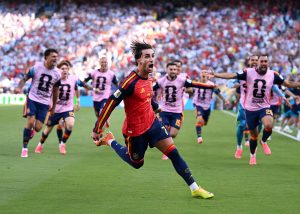
Just 16 minutes into extra time, the moment arrived. A sweeping move from left to right saw substitute Dani Olmo slip a perfectly weighted pass into the path of Ferran Torres, who had entered the fray earlier in the second half. Torres, a Barcelona forward with a knack for scoring in big moments, took one touch to control and then smashed an unstoppable shot past Emiliano Martinez at his near post.
The stadium erupted. Torres sprinted toward the corner flag, sliding on his knees as his teammates mobbed him. It was his fourth goal of the tournament and arguably the most important goal in Spanish football since Andres Iniesta's strike in the 2010 final.
Argentina pushed forward desperately in the remaining 14 minutes, but Spain's defense, organized by the veteran Aymeric Laporte and the prodigious Cubarsi, stood firm. When the final whistle blew, Spanish players collapsed to the turf in exhaustion and elation. Captain Rodri, who had completed 101 passes in the final and controlled the game from midfield, lifted the trophy high above his head as golden confetti rained down.
A Golden Era for Spanish Football
Spain's dominance extends far beyond this single tournament. The men's team is now unbeaten in 38 consecutive matches — the longest run by any European nation in history. Combined with the women's team's World Cup triumph in 2023, Spain can legitimately claim to be the global epicenter of football.
Lamine Yamal, just 19 years and six days old, became the third-youngest player ever to feature in a World Cup final, after the legendary Pele and Giuseppe Bergomi. The Barcelona winger tormented Argentina's defense throughout the match with his trickery and pace, and his best years are still ahead of him.
"Sixteen titles in five years — it's incredible," said manager Luis de la Fuente in his post-match press conference. "This team believes in a style of football that is beautiful to watch and effective to win. We are not finished yet."
The victory was particularly sweet given Spain's shaky start to the tournament, where they drew 0-0 with Cape Verde in their opening match. Sound familiar? In 2010, Spain also lost their opener (1-0 to Switzerland) before going on to win the title. De la Fuente's side grew stronger with each passing game, clicking into gear at exactly the right time.
England Secure Third Place in Thriller
Two days before the final, England claimed the bronze medal in extraordinary fashion, defeating France 6-4 in a wild third-place playoff at Hard Rock Stadium in Miami. The match featured ten goals, with Jude Bellingham scoring twice to lead England to their best-ever World Cup finish on foreign soil.
The game was a breathless affair that showcased everything that makes football unpredictable — end-to-end action, defensive mistakes, and moments of individual brilliance. England's Harry Kane, starting from the bench, came on to score a penalty and provide two assists in the second half as the Three Lions outlasted a French side that had no answer for England's relentless attacking.
"We wanted to finish on a high, and I think we gave the fans a show," said England manager Gareth Southgate. "This team is growing, and we'll be back stronger in four years."
What Comes Next
The 2026 World Cup will be remembered as a tournament of transition — the passing of the torch from the Messi-Ronaldo generation to a new wave of stars. Spain's victory signals the arrival of a dynasty that could dominate international football for years to come.
For Argentina, questions loom about the future. Messi is expected to retire from international football, and several key players from their 2022 triumph are approaching the end of their careers. Rebuilding under manager Lionel Scaloni will be the priority for the next cycle.
As for Spain, the celebrations in Madrid were nothing short of monumental. An estimated 1.8 million fans lined the streets of the capital to welcome their heroes home, with the squad parading the trophy on an open-top bus from the Santiago Bernabeu to the Plaza de Cibeles. King Felipe VI joined the festivities, personally congratulating each player and declaring "World champions!" to the adoring crowd.
For Spanish football, the present is golden, and the future looks even brighter.
Want to bet on the next World Cup or your favorite football matches? Check out KY-MK for the best odds, live betting markets, and exclusive promotions. Sign up today and get a generous welcome bonus on your first deposit!