Spain Crowned 2026 World Cup Champions: Ferran Torres Strikes in Extra Time to Defeat Argentina 1-0
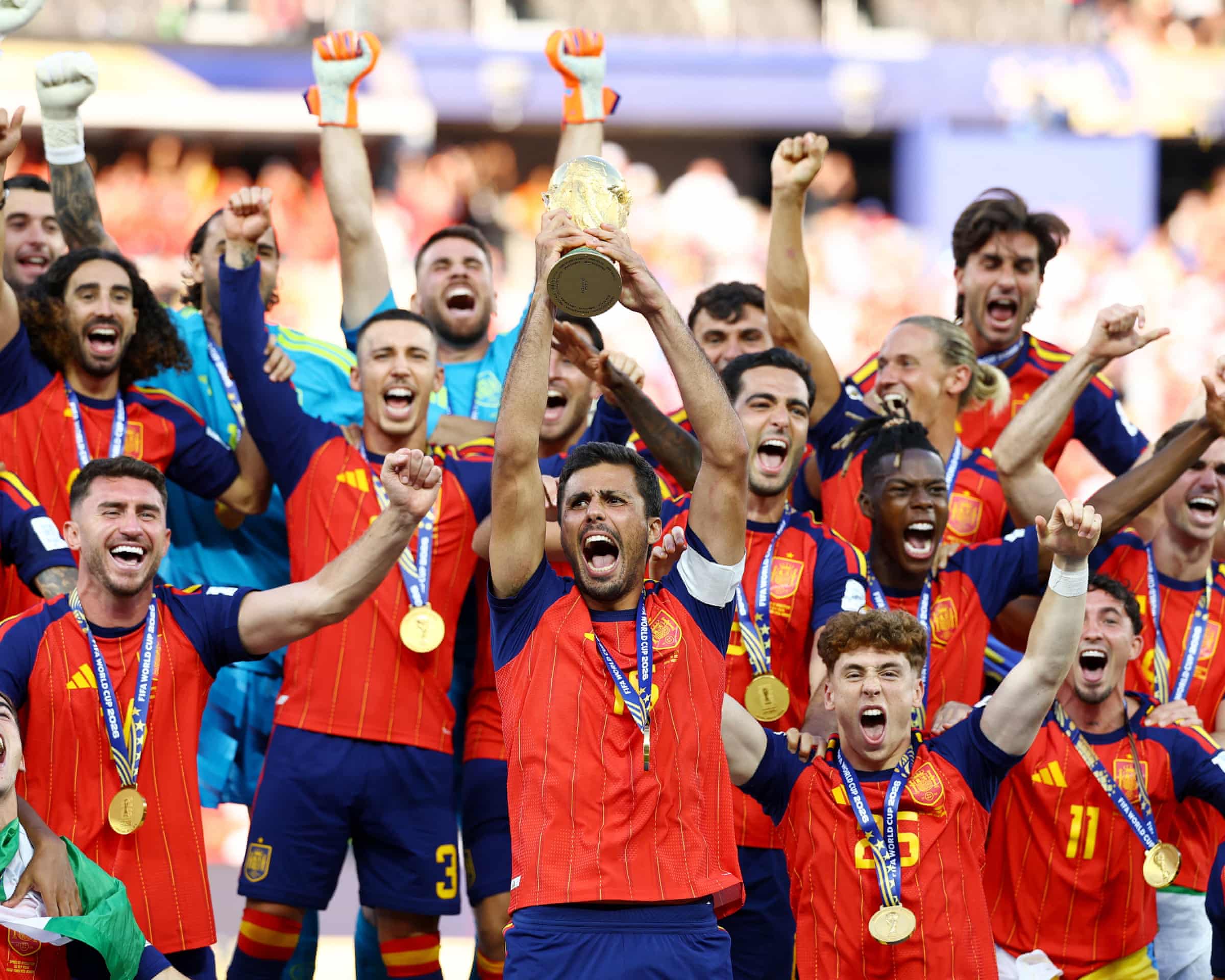
Spain Crowned 2026 FIFA World Cup Champions After Ferran Torres Heroics in Extra Time Thriller
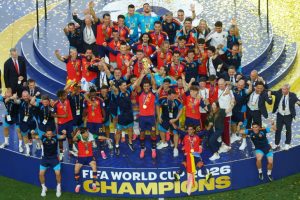
New Jersey, July 19, 2026 — Spain are the kings of world football once again. In a dramatic, tension-filled World Cup final at MetLife Stadium, La Roja defeated defending champions Argentina 1-0 after extra time to claim their second FIFA World Cup title, 16 years after their historic triumph in South Africa in 2010.
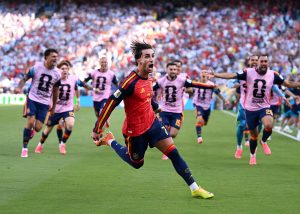
The hero was Ferran Torres. The Barcelona forward, introduced as a substitute in the 62nd minute, struck the decisive goal just one minute into the second period of extra time — a moment of pure precision that broke the hearts of Lionel Messi’s Argentina and sent Spanish fans across the globe into delirium.
Torres pounced on a loose ball inside the box, showing ice-cool composure to slot past Emiliano Martinez as the Argentine defense finally cracked after 106 minutes of resistance. It was a goal worthy of winning any final, and it sealed Spain’s place in football immortality.
A Tactical Masterclass from Luis de la Fuente
Spain’s manager Luis de la Fuente crafted a tactical masterpiece. His side dominated possession — as Spain always do — but more importantly, they controlled the tempo and suffocated Argentina’s explosive attack. The tournament’s highest-scoring offense, which had torn through opponents on the way to the final, was rendered virtually toothless by Spain’s historically dominant defense.
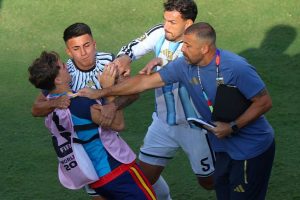
Argentina’s frustration boiled over in the 93rd minute when Enzo Fernandez was shown a straight red card, leaving the Albiceleste to fight the entire extra period with ten men. Even more chaos followed after the final whistle, as Leandro Paredes was also sent off for clashing with Spain’s Gavi in an ugly post-match melee that FIFA has since opened an investigation into.
Rodri: The Captain Who Led by Example
Spain captain Rodri was the heartbeat of the team throughout the tournament. The Manchester City midfield maestro, who has now added a World Cup winners’ medal to his already overflowing trophy cabinet, was deservedly awarded the Golden Ball as the tournament’s best player.
Rodri’s leadership, composure on the ball, and ability to control the rhythm of matches from deep midfield was the foundation upon which Spain built their World Cup triumph. His performances throughout the tournament drew comparisons with some of the greatest midfield displays in World Cup history.
Young Stars Shine Bright
Spain’s triumph was built on a perfect blend of youth and experience. Teenage sensation Lamine Yamal, who had the tournament of his life, showed tremendous maturity — and immense class — when he was seen comforting a devastated Lionel Messi after the final whistle. The 18-year-old Barcelona prodigy had been a constant threat throughout the competition.
Pau Cubarsi, another teenage Barcelona product, was named Young Player of the Tournament after a series of imperious defensive displays that belied his years. The 18-year-old center-back’s reading of the game and composure under pressure were instrumental in Spain’s defensive solidity.
Record-Breaking Ratings and a Historic Tournament
The 2026 World Cup final shattered records across the board. According to Variety, the match drew a staggering 62.8 million viewers in the United States alone, making it the most-watched soccer telecast in American television history. The combination of the first-ever 48-team tournament, co-hosted across the United States, Canada, and Mexico, delivered a spectacle that captivated the world.
The tournament itself was historic in scale — 48 nations, 104 matches, played across 16 cities in three host countries over six weeks. From the opening match on June 11 to the dramatic final on July 19, the 2026 World Cup delivered goals, drama, upsets, and unforgettable moments at every turn.
Golden Boot and Individual Honors
France’s Kylian Mbappe claimed the Golden Boot as the tournament’s top scorer, further cementing his status as one of the game’s all-time greats. Spain’s clean sweep of major individual honors — Rodri’s Golden Ball, Cubarsi’s Young Player award, and the team’s ultimate prize — reflected the depth and quality of de la Fuente’s squad.
Madrid Welcomes Its Heroes Home
The celebrations in Spain were nothing short of spectacular. The squad touched down in Madrid on Monday afternoon to a hero’s welcome, with captain Rodri lifting the World Cup trophy at the top of the aeroplane steps in an iconic image that will be remembered for generations.
An open-top bus parade through the streets of central Madrid saw hundreds of thousands of ecstatic fans line the route, creating a sea of red and yellow. The team’s first official stop was at Zarzuela Palace, where King Felipe VI, Queen Letizia, Princess Leonor, and Infanta Sofia welcomed the champions. Videos circulating on social media captured unforgettable scenes as the Spanish squad sang and danced on the bus, with Lamine Yamal leading the crowd in a rendition of Bad Bunny as the party rolled through the Spanish capital.
What Comes Next for Spain and Argentina?
For Spain, this World Cup triumph represents the beginning of what could be a golden era. With a young core featuring Yamal, Cubarsi, Pedri, and Gavi, combined with the experience of Rodri, Carvajal, and Morata, La Roja are perfectly positioned to dominate international football for years to come. The 2028 European Championship will be their next target, and on this evidence, they will be the team to beat.
For Argentina, the defeat marks the painful end of an era. Lionel Messi, at 39, saw his dream of back-to-back World Cups shattered. The post-match scenes — with Messi in tears, Paredes’ red card, and the bitter fights — underscored the raw emotion of a team that came so close but fell just short. Questions will inevitably be asked about the future of manager Lionel Scaloni and the direction of the national team.
A World Cup for the Ages
The 2026 FIFA World Cup will be remembered as the tournament that broke every mold — the first to span three nations, the first with 48 teams, and the one that delivered a final of extraordinary tension and drama. From the stunning group stage upsets to the nerve-shredding knockout rounds, from the emergence of new stars to the farewell of a legend, this was a World Cup like no other.
Spain’s victory was a triumph of football philosophy — of possession, pressing, and patience. They refused to deviate from their identity even against the reigning champions, and in the end, it was that belief that carried them to glory. Ferran Torres, a substitute who wrote his name into Spanish football folklore, delivered the decisive blow. But this was a victory shared by an entire nation.
Spain are world champions once more. And the football world is already counting down to 2030.
🏆 Want to Bet on the Next Big Match?
Get the best odds on the 2026 World Cup finals, upcoming international fixtures, and club football from across Europe.
Visit KY-MK Sportsbook →
KY-MK: Your home for the best football betting odds, live in-play markets, and fast payouts.