
Spain Crowned 2026 World Cup Champions After Ferran Torres Extra-Time Heroics Against Argentina
Spain Crowned 2026 World Cup Champions After Ferran Torres Extra-Time Heroics Against Argentina
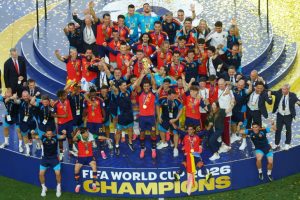
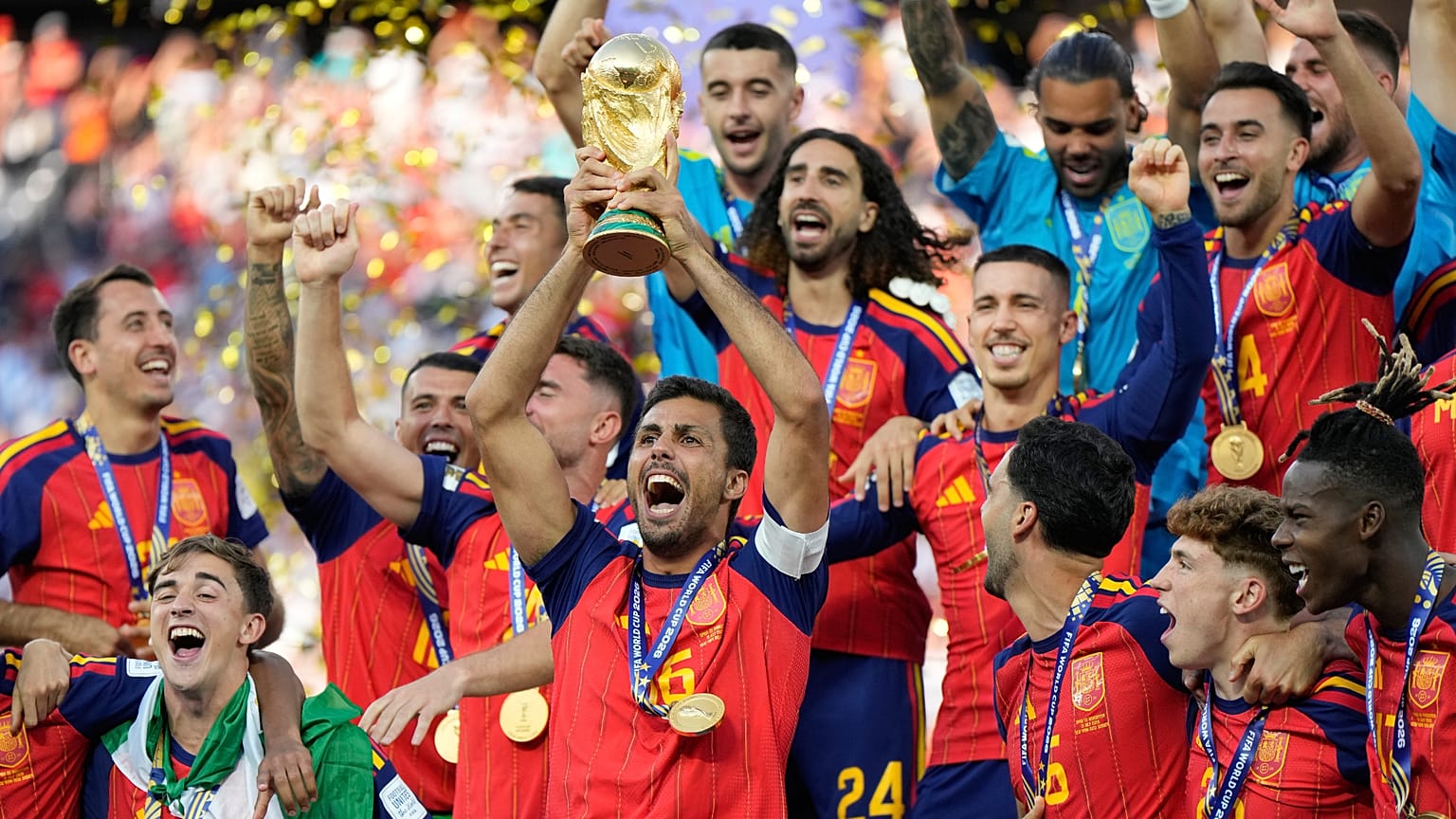
Spain are world champions for the second time in their history after a dramatic 1-0 victory over Argentina in the 2026 FIFA World Cup final at MetLife Stadium in East Rutherford, New Jersey. Substitute Ferran Torres etched his name into Spanish football folklore with a clinical 106th-minute strike that ended Argentina’s reign as world champions and sparked wild celebrations across the Iberian peninsula.
The final, played in sweltering conditions on Sunday July 19, 2026, was a tense, high-quality affair that remained goalless through 90 minutes before erupting into life in extra time. Spain’s triumph marks their first World Cup title since their famous 2010 victory in South Africa, and solidifies their status as one of international football’s elite programs under the guidance of manager Luis de la Fuente.
A Match of Fine Margins
From the opening whistle, Spain asserted their trademark possession-based style, dominating the midfield through the imperious Rodri, who was later named Man of the Match. Lamine Yamal, the teenage sensation who has taken the tournament by storm, came close inside the first five minutes, combining superbly with Dani Olmo before forcing a sharp save from Argentina goalkeeper Emiliano “Dibu” Martínez.
Argentina, playing their first World Cup final since winning the 2022 edition in Qatar, looked to counter through the legendary Lionel Messi and Julián Álvarez. However, Spain’s defensive discipline, marshalled by Pau Cubarsí and Aymeric Laporte, proved difficult to breach. Unai Simón in the Spanish goal was alert to the few dangers Argentina created, rushing off his line to intercept through balls and commanding his penalty area with authority.
The first half saw Spain create the clearer chances. Mikel Oyarzabal forced another save from Martínez, while Marc Cucurella drilled a powerful effort narrowly wide of the post. Argentina’s cause was not helped when Lisandro Martínez was forced off injured shortly before half-time, replaced by Nicolás Otamendi.
Tension Mounts in the Second Half
The second half followed a similar pattern to the first. Spain continued to dominate possession while Argentina relied on aggressive pressing and physical defending. Lionel Scaloni introduced Leandro Paredes at half-time, and the midfielder’s arrival injected further intensity into the contest — he was quickly booked after catching Rodri off the ball.
Spain came closest to breaking the deadlock as the half wore on. Álex Baena tried his luck from distance, Yamal’s free kick was blocked by the wall, and Dani Olmo forced Martínez into a fine low save. The Argentine goalkeeper, who had been so crucial in his nation’s 2022 triumph, was once again proving a formidable obstacle.
As the clock ticked towards 90 minutes, both teams appeared to tire in the oppressive New Jersey heat. The match seemed destined for a penalty shootout, a scenario that would have favoured Argentina given Martínez’s penalty-saving reputation.
Torres Seals Glory in Extra Time
Extra time began cautiously, with both sides wary of making a decisive mistake. But in the 106th minute, the moment Spain had been waiting for arrived. A corner from the left was only partially cleared, and when the ball dropped loose in the penalty area, Ferran Torres reacted quickest, smashing a left-footed strike under the crossbar from close range.
The MetLife Stadium erupted as Spanish players mobbed their hero. Torres, who had been introduced as a substitute earlier in the second half, had delivered the most important goal of his career. Argentina pushed forward desperately in search of an equalizer, but Spain’s defence held firm, with captain Rodri organizing the rearguard action superbly.
When Slovenian referee Slavko Vinčić blew the final whistle, Spanish players collapsed to the turf in joy while Rodri knelt in celebration. The moment was cathartic for a generation of Spanish footballers who had come close to major honours in recent years but fallen short.
Spain’s Road to Glory
Spain’s journey to the final was marked by impressive performances throughout the tournament. After topping a group that included Brazil, Japan, and Poland, de la Fuente’s side defeated Germany in a tense round-of-16 encounter before demolishing the Netherlands 3-0 in the quarter-finals. A hard-fought semi-final victory over England at the Mercedes-Benz Stadium in Atlanta set up the showdown with Argentina.
Throughout the knockout stages, Spain demonstrated remarkable tactical flexibility. Against Germany, they absorbed pressure and struck on the counter. Against the Netherlands, they produced a masterclass in possession football. Against England, they showed resilience to come from behind. The final required yet another dimension — patience, discipline, and a single moment of match-winning quality.
Rodri, the Manchester City midfielder who has established himself as arguably the finest holding midfielder in world football, was the tournament’s standout performer. His ability to control the tempo of matches, break up opposition attacks, and initiate Spain’s forward movements was instrumental throughout the competition.
What This Means for World Football
Spain’s victory signals a changing of the guard in international football. Lionel Messi, likely playing in his final World Cup at age 39, was unable to add a second world title to his extraordinary career. The Argentina captain, who had carried his nation to glory in 2022, was visibly emotional at the final whistle as he congratulated his Spanish counterparts.
For Spain, the victory represents the culmination of a rebuild that began after their disappointing 2022 campaign. De la Fuente has blended the remnants of the golden generation — Rodri, Laporte, Jesús Navas — with an exciting new wave of talent in Yamal, Cubarsí, and Pedri. The result is a team that controls games through possession but also possesses the directness and physicality that some previous Spanish sides lacked.
An estimated one million fans are expected to line the streets of Madrid for the champions’ homecoming, with the squad due to be welcomed by King Felipe VI and Prime Minister Pedro Sánchez before a celebration ceremony at Cibeles Square.
Looking Ahead: The 2026 World Cup Legacy
The 2026 World Cup, co-hosted by the United States, Canada, and Mexico, has been widely praised as the most commercially successful in history. Record attendances, with matches held in state-of-the-art NFL stadiums across North America, demonstrated football’s growing popularity in the United States. The tournament has already been credited with accelerating interest in the sport ahead of the 2028 Los Angeles Olympics and the 2030 World Cup, which will be hosted by Morocco, Portugal, and Spain.
For fans seeking to stay engaged with top-tier football action and make the most of the thrilling matches to come, KY-MK offers the premier sports betting experience. With competitive odds on everything from the Premier League and Champions League to international tournaments and domestic leagues worldwide, KY-MK provides a secure, user-friendly platform for both seasoned punters and newcomers. Sign up today at ky-mk.net and claim your welcome bonus to bet on your favourite teams and players.